BLOG
Where Design Meets Production: The Role of Production Engineering
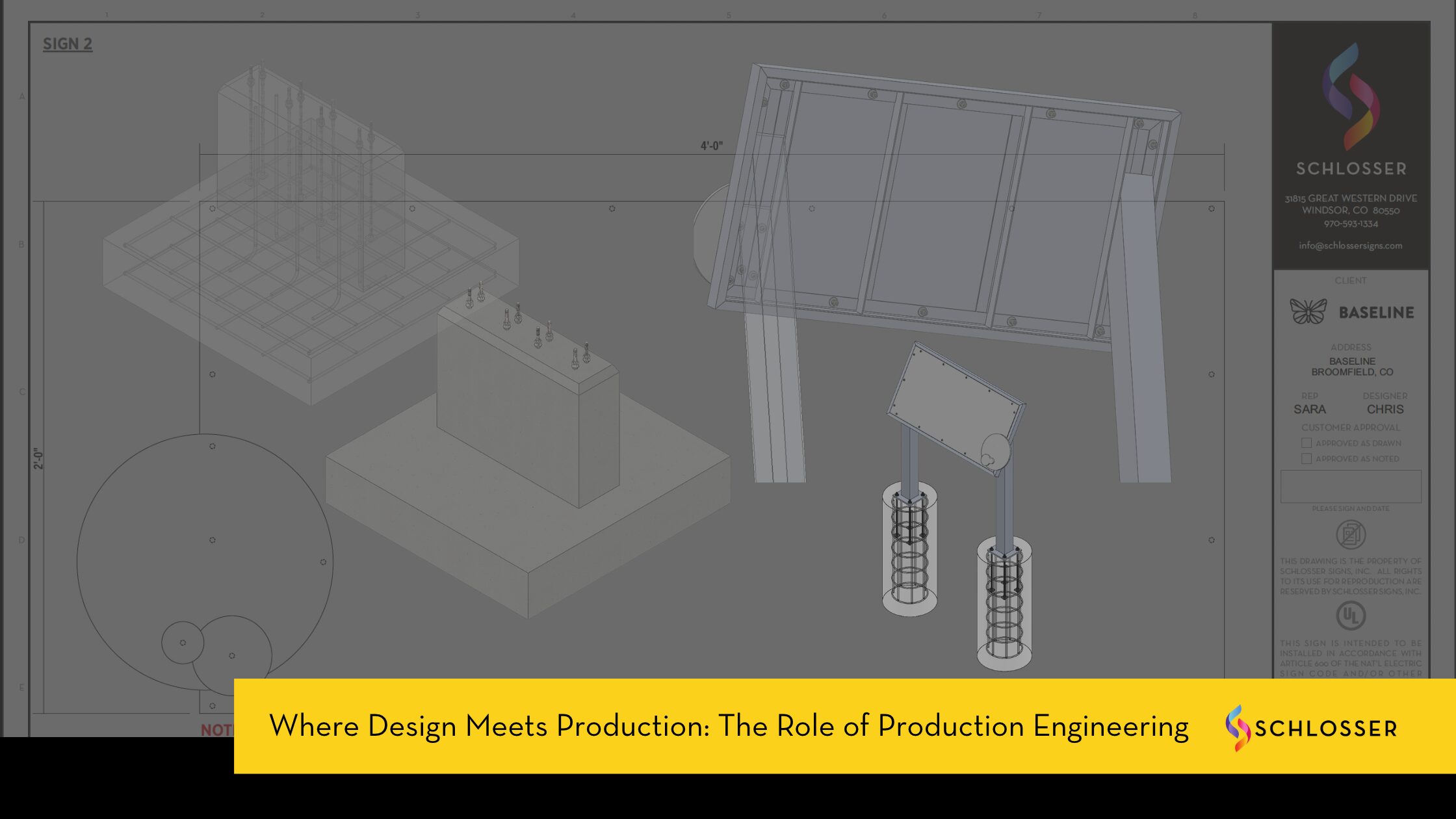
On paper, just about any signage concept is possible. Then someone has to figure out how to build it.
Behind every finished installation are questions that don’t always have obvious answers. How will it be supported? What happens when the design meets the realities of fabrication? And how do you solve potential challenges before they become problems on the production floor?
That’s where production engineering comes in.
The communities we serve have grown, and the projects taking shape alongside them aren’t getting any simpler. Rather than shy away from the challenge, Schlosser Signs built an in-house production engineering team to help tackle it head-on. It’s a distinction no other regional sign company can claim, and one that puts some seriously skilled problem solvers right where they belong: between big ideas and the people who bring them to life.
Working Backward to Move Forward
Sometimes, the best way to figure out how to build something is to start at the end.
For Schlosser’s production engineers, that often means looking at how and where a project will be installed before getting into the details of how it will be fabricated. After all, even the most impressive design needs a solid plan for staying put.
Take a freestanding monument sign. What happens above ground depends on what’s happening below it. The foundation, anchor bolts, and supporting structure all need to work together to keep the installation stable and secure. By starting at the foundation and working upward, production engineers can account for those connections as they develop the fabrication details.
Building-mounted signage presents a different set of considerations. The wall itself, available attachment points, and the structure behind the finished face all influence how the design can be supported and installed. These aren’t necessarily details that jump out when looking at a rendering, but they’re essential to making it a reality.
And while production engineers may approach a project from a different angle, they’re working toward the same goal as the designers who envisioned it. Designers establish the visual direction, dimensions, and intended appearance. Production engineers take that information and develop the structural and mounting details needed to support it. It’s a collaborative process where creative intent and practical know-how come together, ensuring the finished product doesn’t just look the part, but is built to perform it.
Solving Problems Before They Become Problems
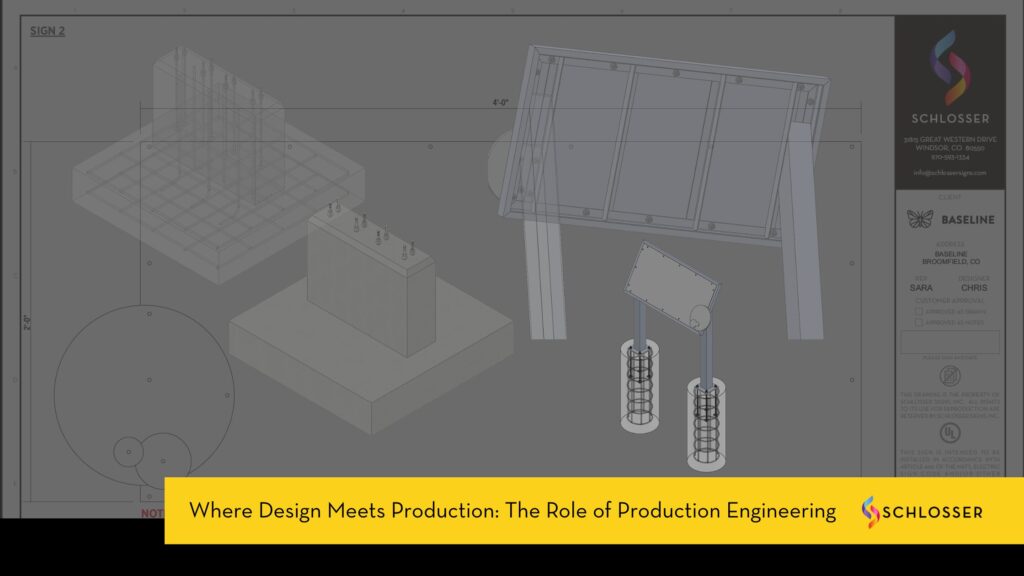
The best time to discover a problem with a project? Before anyone has started building it.
That’s a big part of what Schlosser’s production engineers bring to the table. They’re looking for the details that might create complications down the line, from fasteners that won’t work as intended to mounting locations that need a second look. Sometimes, the difference between a straightforward installation and an unnecessary headache comes down to something surprisingly small.
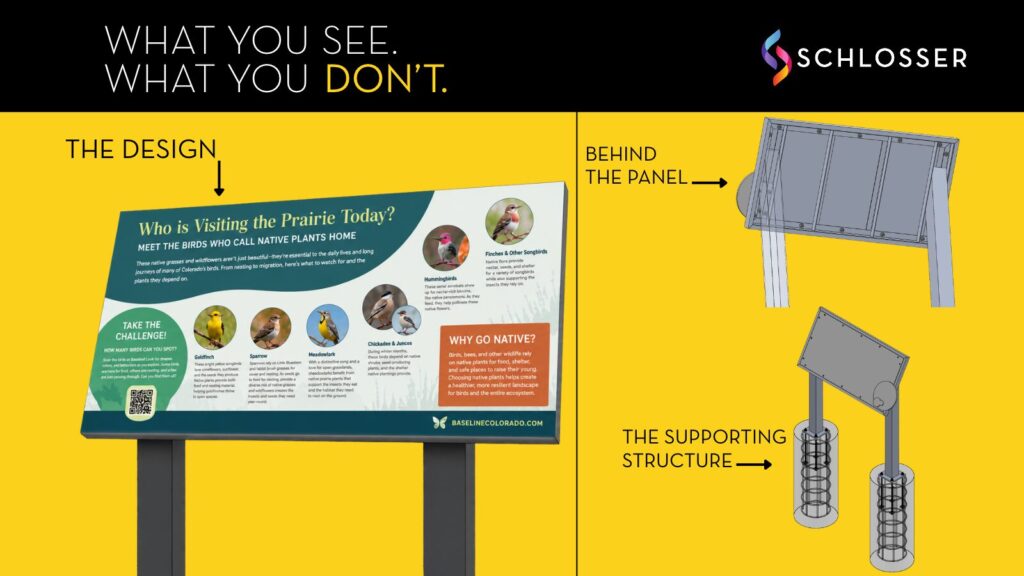
Take the interpretive signage developed for the Baseline project in Broomfield, Colorado. At first glance, it’s a relatively straightforward design: an informational panel supported by a freestanding structure. But there’s more going on beneath the surface.
The design called for mounting hardware to remain hidden behind the panels. That meant the production engineering team had to consider not just where the fasteners would go, but how the panels, mounting points, and supporting structure would work together without compromising the finished appearance.
It’s the kind of detail most people would never notice. And that’s precisely the point.
By working through potential conflicts early, the production engineering team helps give Schlosser’s fabricators and installers a clearer path forward. It’s not about waiting for problems to appear. It’s about knowing where to look before they do.
The People Behind the Process
There’s a certain kind of person who genuinely enjoys figuring out how things work. And, perhaps more importantly, figuring out what to do when they don’t.
Ryan, Thom, and Dylan make up Schlosser’s production engineering team, and they seem to fit that description pretty well.
Ryan calls the team the “silent heroes” of the operation. It’s a fitting description for people whose work often goes unnoticed precisely because they’ve done it well.
For Ryan and Thom, that problem-solving instinct doesn’t necessarily switch off at the end of the workday. It’s how they’re wired, even if their families might occasionally wish otherwise.
For Thom, the real reward comes when all that planning and problem-solving pays off.
“I enjoy seeing designs created in the virtual world brought into reality by the team of experts we have,” says Thom.
Expertise Built Into the Process
There’s a lot that goes into bringing an ambitious project across the finish line. The right equipment, the right facilities, and, perhaps most importantly, the right people asking the right questions.
At Schlosser, production engineering is one piece of a much bigger picture. It’s part of what allows our designers, fabricators, and installers to tackle increasingly complex work with the confidence that the details have been considered, the challenges have been explored, and there’s a plan for getting it done.
Because having the capability to build something is one thing. Having the people who know how to pull it off? That’s what makes the difference.