BLOG
A Few Things We Believe About Good Work
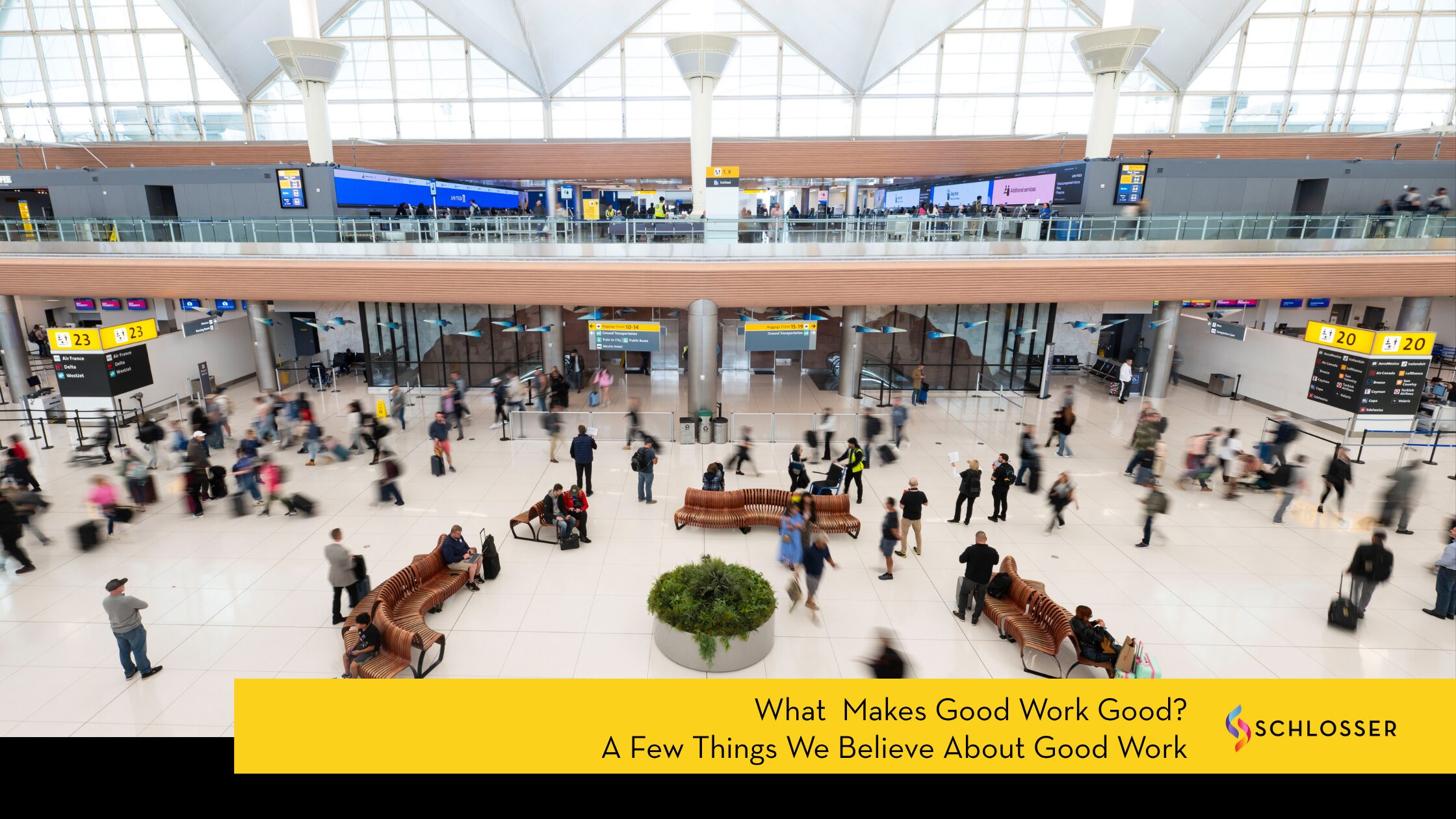
What makes good work good?
There are some obvious answers. Quality matters. Craftsmanship matters. Experience certainly helps. The finished product should look right, work the way it’s supposed to, and hold up long after everyone has packed up and moved on to the next project.
We believe in all those things. But after decades of designing, building, installing, problem-solving, coordinating, adjusting, and occasionally figuring things out the hard way, we’ve learned that good work is rarely just about the thing you’re making.
A lot of it happens around the edges: the questions someone thinks to ask early, the detail that gets caught before it becomes a problem, the conversation that gets everyone moving in the same direction, and the willingness to look beyond your own piece of the project to understand what everyone is trying to accomplish together.
Those things may be harder to photograph when the project is finished, but they have a lot to do with how it gets there.
Start with the bigger picture.
There’s always a scope of work. There are drawings, specifications, schedules, budgets, deadlines, and a long list of things that need to happen before installation day. All of that tells us what we’re being asked to make, but it doesn’t always tell us everything we need to know.
Where does our work fit into the larger project? What is the client ultimately trying to accomplish? How will people interact with the space? What other teams and trades are working around us?
Those questions matter because signage is particularly good at reminding you how interconnected a project really is. A sign might need to satisfy a design standard, communicate information clearly, work with the architecture around it, accommodate real-world fabrication and installation conditions, and still look exactly like it belongs there.
None of those considerations exists separately. Understanding the bigger picture isn’t something we see as extra; it’s part of doing our own piece well. The more context we have, the better questions we can ask, and sometimes one good question early on saves a whole lot of trouble later.
Complexity doesn’t have to feel complicated.
Some projects really are complicated. There may be dozens of sign types, multiple buildings or locations, changing field conditions, ambitious design ideas, tight schedules, or several stakeholders making decisions at different points in the process. Sometimes it’s all the above.
Experience doesn’t magically make those moving pieces disappear. What it does is change how you respond to them.
You learn where to look a little closer and recognize the questions that need answers before fabrication begins. You know when something on paper might behave differently once it’s built. When something inevitably changes, you also have enough context to figure out what that change affects next.
That’s part of what expertise should provide. Not the promise that nothing unexpected will ever happen, because anyone who works on complex projects knows better than that, but the ability to navigate what happens next.
There’s often a tremendous amount of coordination and problem-solving happening behind the scenes on a successful project. Ideally, the client shouldn’t have to carry the weight of every bit of it. Complex work can still feel clear.
Details aren’t little things.
It’s easy to talk about attention to detail as though it’s simply a personality trait: we’re meticulous, we care, we check our work. Of course we do. But details matter for a much more practical reason. They’re connected to everything else.
A finish that’s slightly off may change how a sign relates to the environment around it. A dimension that doesn’t quite work in the field can create a problem at installation. A beautiful design may need some thoughtful problem-solving to become something that can actually be fabricated without losing what made the design work in the first place.
Small decisions accumulate, and their impact doesn’t necessarily stay small.
When those decisions are handled well, you may never notice them at all. You simply walk into a space, and everything feels considered. The signage belongs with the architecture, the design intent made it through fabrication, and information is where people expect to find it.
The finished work feels like part of the environment rather than something added to it afterward. That’s the kind of detail we care about.
Craftsmanship isn’t only about making something well. It’s about understanding what that something is part of and making decisions accordingly.
And sometimes, the work isn’t really the point.
We make signs: big ones, small ones, straightforward ones, and the kind that require quite a few heads around a table before anyone starts building. We’re proud of that work. There’s something satisfying about seeing an idea move from drawings and conversations to a finished piece in the real world.
But some of the outcomes we value most aren’t things you can photograph.
It’s catching something early enough that it never becomes the client’s problem. It’s having the conversation that gets everyone unstuck. It’s knowing who to call when a question comes up and knowing they’ll pick up.
It’s being able to say, “We’ve seen something like this before,” while also understanding that this project may need a different answer.
And sometimes, it’s reaching the end of a complicated project with not only good work behind you, but enough trust that working together again feels easy.
That doesn’t happen because every project goes perfectly. They don’t. It happens because of how people respond when decisions need to be made, conditions change, or something doesn’t go according to plan.
Good work asks for technical skill, experience, and craftsmanship. But it also asks for curiosity, communication, judgment, flexibility, and a willingness to care about things beyond your own scope.
Maybe that’s why defining it isn’t quite as simple as it seems. At the end of the day, there should absolutely be something we’re proud to put our name behind.
We just believe the way we got there matters, too.